

Environmental: Asbestos Management
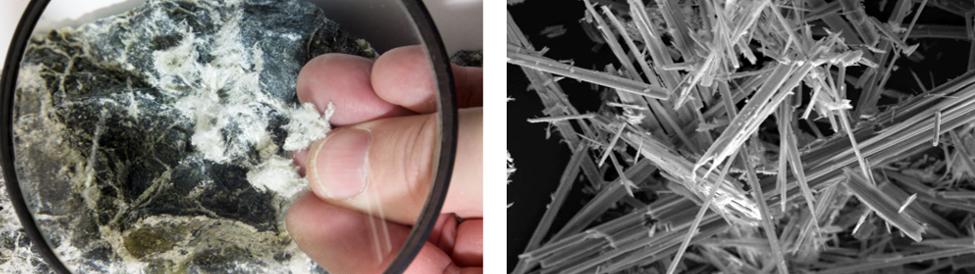
What is asbestos?
Asbestos is a general term given to a group of naturally occurring mineral silicates that are made up of long, thin fibers. It is resistant to heat, electricity, chemicals, and corrosion. Because of these properties, it was added to/used in a wide variety of products and building materials. Asbestos becomes harmful when it is disturbed or damaged, causing the fibers to become airborne.
Is asbestos always hazardous?
No. Asbestos is only hazardous when small particles (fibers) become airborne and are inhaled or ingested. Intact, sealed, and undisturbed asbestos containing materials (ACM) are not a hazard. Construction products in good condition will not release asbestos particles into the air. Hard products, such as vinyl floor tile and cement shingles, contain binders that completely encapsulate the asbestos for added protection. Soft products, such as pipe insulation, may be completely sealed with a canvas or steel jacket. Walls, ceilings, and floors (part of the building envelope), may also act as barriers that separate occupied building areas from asbestos containing materials located in interior building elements, components, or spaces.
How does Montana State University manage asbestos?
Montana State University utilizes a manage in place strategy and adheres to applicable regulatory requirements. Included in the MSU strategy is the use of an Asbestos Management Plan (AMP) and the use of Montana accredited asbestos contractor(s) to identify, remove, and dispose of asbestos contact materials (ACM).
What are the responsibilities of campus community members and guests?
Campus community members and guests have the responsibility to adhere to the AMP, including but not limited to:
•Do not disturb or damage any building materials and/or building envelope.
•Do not enter attics or crawl spaces without appropriate inspection and/or approval.
•Do not disturb, move, or remove ceiling tiles.
•Do immediately report any damage or disturbance to building materials/envelope.
•Do reach out with any questions.
•Do contact facilities to ask permission before any activities that might disturb
or damage anybuilding materials/envelope.
How are damaged or disturbed materials reported?
Report any damaged or disturbed materials immediately to your Building Manager and submit a completed Facilities Services Work Request Form.
What materials may contain asbestos?
Materials that may contain asbestos, include but are not limited to those listed below.
•Acoustic ceiling or wall tiles and adhesives.
•Air and furnace duct insulation.
•Air duct seam tape and vibration cloth.
•Base cove and ceramic tile adhesives.
•Cement pipe, flue, conduit, and exhaust duct.
•Corrugated and flat cement siding.
•Caulking and glazing components.
•Door and wire insulation.
•Fireproofing.
•Floor tiles, sheet vinyl, linoleum, and adhesive (mastic).
•Gaskets, oakum, and muffler insulation.
•Laboratory countertops, equipment, insulation, and fume hoods.
•Pipe, tank, and boiler insulation.
•Plaster and sheetrock joint compounds.
•Roofing tar, felt, mastic, and shingles.
What is an environmental survey and how is it requested?
An environmental survey is a comprehensive asbestos building survey. While an environmental survey is not required for all buildings, it may be used as a supplement to the AMP. A copy of the environmental survey for a specific building may be requested by submitting a complete Environmental Survey Request (ESR). Once the request has been received, it will be reviewed by the Safety & Risk Management team. Please expect to be contacted withing 10 business days.
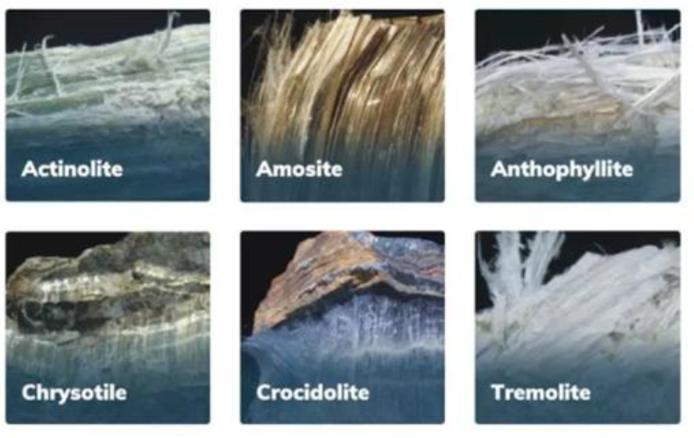
Are there different types of asbestos?
Yes. There are six different types of asbestos.
Are additional resources and information available?
General asbestos information is available by visiting Montana DEQ Asbestos Control Program page. Referenced and additional resources are also included but not limited to those provided below.
•Montana DEQ Asbestos Control Program
•Administrative Rules of Montana (ARM) 17.74 Subchapter 3: Asbestos Control
•Administrative Rules of Montana (ARM) 17.74 Subchapter 4: Asbestos Fees
•Montana Code Annotated (MCA), Title 75, Part 5
•National Emissions Standards for Hazardous Air Pollutants (NESHAP) 40 CFR 61,subparts
A&M
•Model AHERA Asbestos Management Plan for Local Education Agencies | US EPA
•OSHA3507 Asbestos Fact Sheet.pdf
•OSHA 1910.1001 Asbestos
•OSHA 1926.1101 Asbestos
•ATSDR Asbestos Tox Profile
•ATSDR Asbestos ToxFAQs
How are other questions addressed?
You may email esr@montana.edu with additional asbestos related questions and a member of the Safety & Risk Management team will contact you via the provided information.